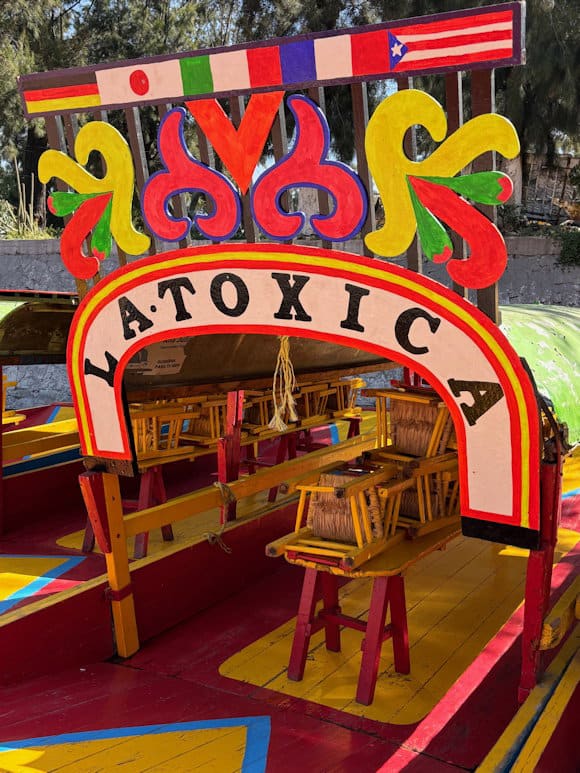
The Floating Gardens of Xochimilco (chimpampas) are just 25km (15 mile) from the historic centre of Mexico City, but as a mega-city of 22 million people, it can take over an hour to reach them.
They have a delightful carnival atmosphere where visitors can float on brightly painted punts down the tree-lined main canal past small houses, gardens and a garden centre. Musicians board the punts, playing marimba and mariachi music, flower-sellers in canoes and floating kitchens come alongside. Boats making the return trip pass slowly by and there are periods of peace and tranquility, as there are no outboard motors and little other noise. It is such a happy, positive place and a unique attraction for visitors. On Sundays, crowds of city residents arrive and the party atmosphere reaches a crescendo.
The working parts of the chimpampas are difficult for visitors to see and are accessed by a network of canals just wide enough for the farmers’ canoes. They still supply Mexico City with market garden produce, fruit, vegetables and flowers, and there are early evening agricultural tours available but with a Spanish commentary.
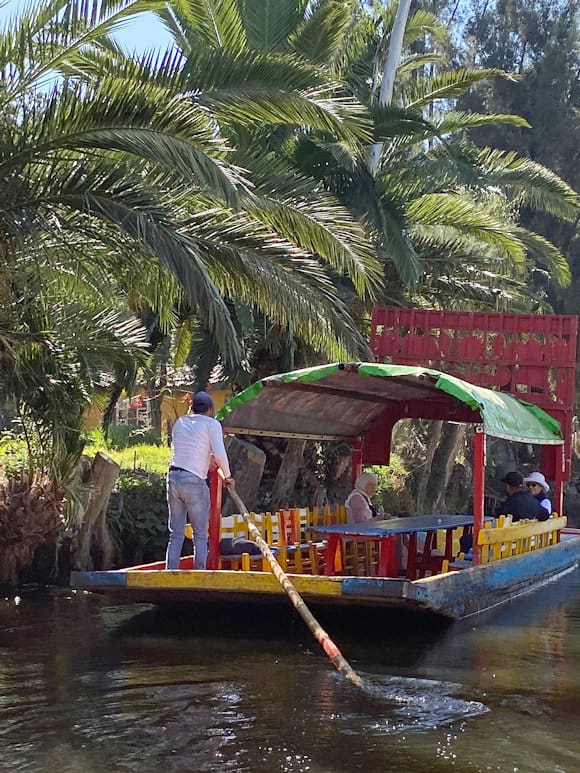
From pre-Aztec times, over 1000 years ago, large areas of the vast shallow lake were marked off with stakes and infilled with rafts of ahuejote branches (a native willow) topped with mud and soil. The stakes grew into trees around the chimpampas, and as the rafts sank, more branches, soil and mud were placed on top. This ingenious system proved ideal for market gardening, and is still rated as one of the most productive and sustainable systems of farming in the world with its abundant water supply, fertile soil and cooling breezes. The interlacing network of canals proved ideal for transporting the produce to the city.
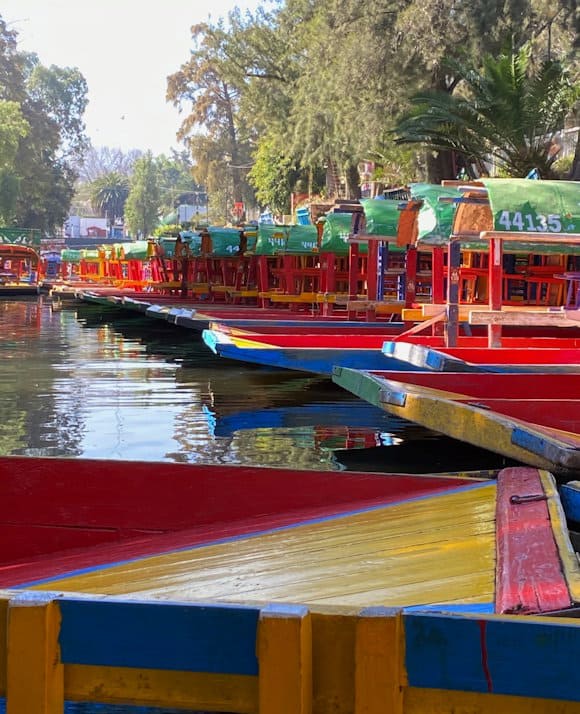
In the 15thC the chimpampas provided for a city of 150-300,00 residents, one of the largest cities in the world. (At that time, London was 50-60,000 inhabitants). The siege of the Aztec capital, Tenochtitian, in 1521, by the Spanish and their allies cut the city off from its food supplies, leading to mass starvation, further compounded by the arrival from Europe of the smallpox virus. It is estimated that between 100,000 and 240,000 people in the city died, the city was sacked, and the Aztec Empire destroyed.
At the time of the Spanish conquest the chimampas covered 179ksq.km, (today just 25sq.km remain, with 170km (105 m) of canals). Following a major flood in the early 17C, the Spanish started draining and filling in the lake, a process that has rapidly accelerated from the early 20thC as the city grew from 335,000 to its present enormous size.
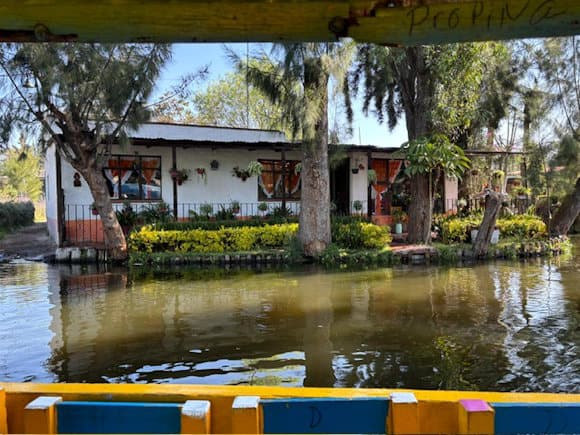
The explosive growth in size of Mexico City has put the chimpampas in serious danger. Pumping water from the aquifers below the lake from the start of the early 20thC has lowered the water table drying up many canals. Water from natural springs and the two rivers that feed the lake is now supplemented by reclaimed waste water. This includes heavy metals, some inappropriate bacteria and pollutants. In some parts of the lake, the water extraction is causing the area to sink by as much as 18cm (7”) a year.
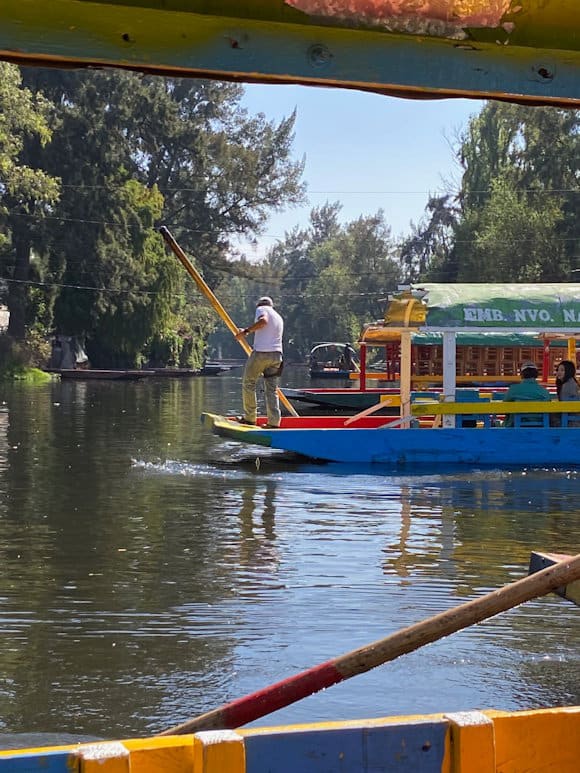
Illegal settlements on the chimpampas now have a populatioin of 35,000, filling in parts of the canal system and adding fecal matter and garbage to the remainder. Overgrowth of invasive plant species, especially waterlilies is depleting the canal system of oxygen and minerals, the city authorities removing 400 tons of plant material a month, whilst invasive carp species are upsetting the ecological balance.
In 1987, UNESCO recognised how serious was the threat to its existence, and made it a World Heritage Site. Now they are threatening to remove that coveted status. This wonderfully creative garden, a remnant of one of the wonders of the New World, is probably the most at risk place I have ever visited, and the portents for its future are not good.
Garden Details:
Website: unesco world heritage centre – xochimilco
Address: Embarcadero de Cuemanco, Periferico Sur S/N, Cuemanco,
16034 Ciudad de Mexico, CDMX
Food and drink: Available from passing canoes
Disabled access: Difficult – across moored punts, to the chosen punt
Opening times: From 8.30 until sunset
Richard Jackson 7 February, 2024