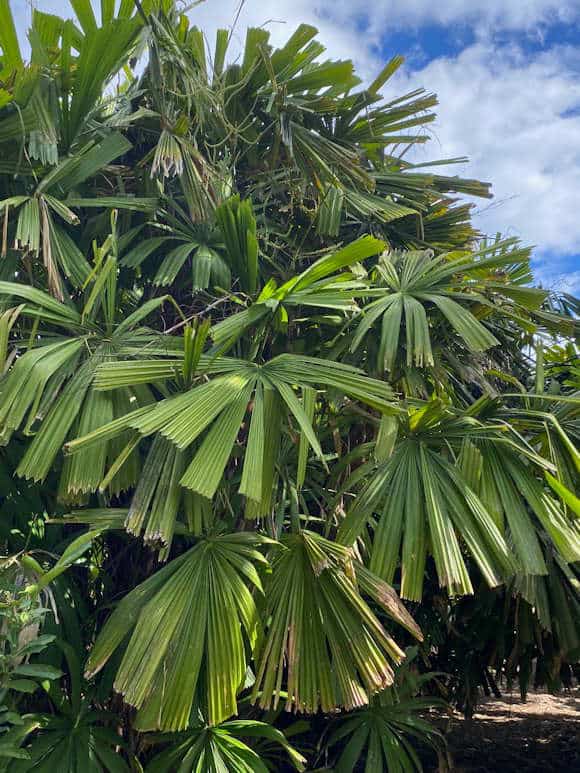
Gardens can be interesting for many reasons, but for me there is one category that holds a special fascination – those created by almost superhuman effort out of the most inauspicious circumstances. The Palmatum in Santa Cruz, Tenerife is one such garden.
This part of Santa Cruz is known as El Lazareto from the Italian Lazzaretto, meaning a leper colony; a term subsequently used for any port area where people were quarantined with suspected bubonic plague, leprosy, yellow fever, cholera and typhus. The area was land reclaimed from the sea, and following the closure of the colony it was used by light industry and as a municipal rubbish dump. By the 1980s this dump had grown to over 40 metres (120 feet) high, and had become a source of frequent spontaneous fires, noxious fumes and a health hazard to the expanding city. Something had to be done, but the site lay closed and abandoned until the early 1990s.
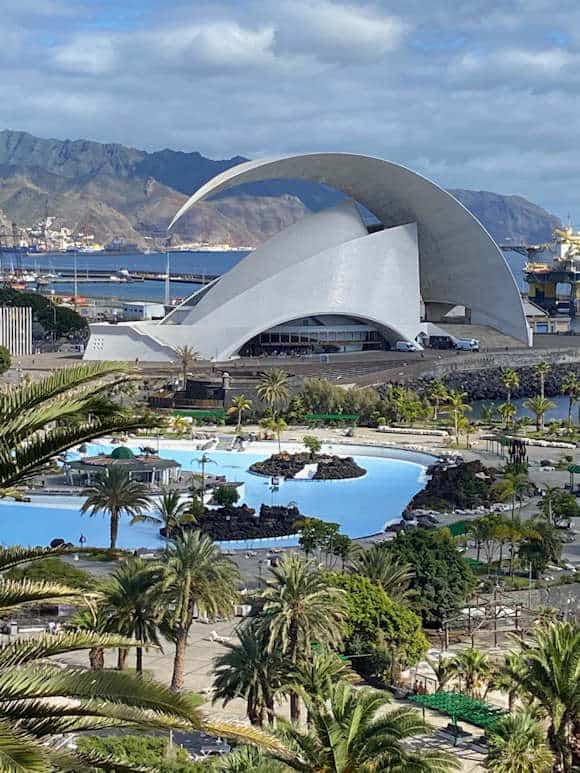
By this time, other parts of the prime coastal frontage of El Lazareto were being developed – the Parque Maritimo, a leisure complex of saltwater pools, waterfalls, volcanic rock scenery and restaurant designed by Lanzarote architect Cesar Manrique opened in 1995. First considerations were being given to the iconic, some might say showy, Auditorio de Tenerife, designed by the famous Spanish architect and structural engineer, Santiago Calatrava, which subsequently opened in 2003.
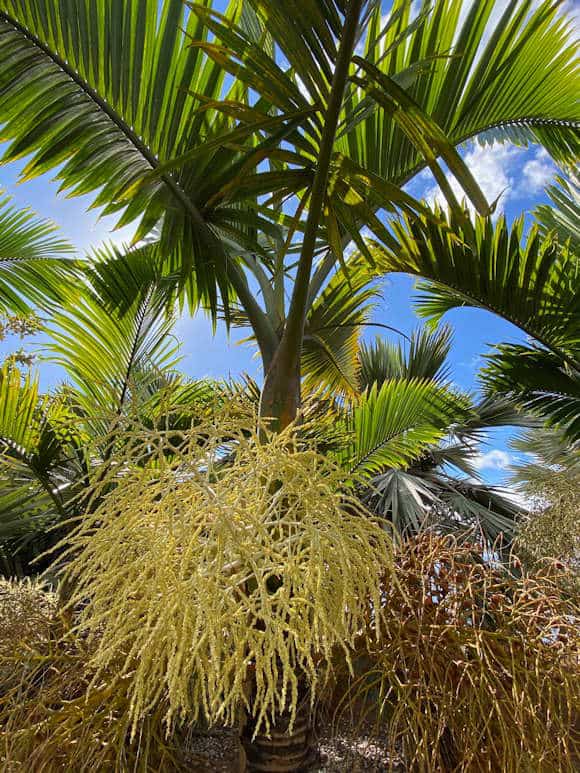
The agronomist, Manuel Caballero had put forward a proposal for the site of the rubbish dump in the early 1990s, with Cesar Manrique acting as design consultant, but his involvement was cut short by his tragic death in a car accident. It was an idea particularly appropriate to Tenerife’s equitable climate and hot sunshine – a botanical garden dedicated to a wide range of palms from tropical, sub-tropical and desert regions, a plant collection of importance to researchers, but also, importantly, a place to be enjoyed by the wider public.
1n 1995, with funding from the EU, the palmatum project started. A gas extraction system of wells, pumps and flares was installed, and the first part of the site turfed over, whilst in a greenhouse, seeds, often from other botanical institutions, were being germinated. Carlos Simon was appointed to manage the project and with his fine arts background to make it distinctive and appealing to a wider public. By 2000 less than 1/3 of the hillside was landscaped, the project ran out of funding and started to degrade, plants died, but the windbreaks from the north and east, essential for the project’s success thrived. By 2007, new funding from the city council, regional and national government enabled the project to be resumed, but the inauspicious nature of the site caused many of the larger specimens to take years to acclimatise. By 2014, some eighteen years after its start, the project finally opened to the public.
After visiting the Auditorio, and viewing the Parque Maritimo my first impressions of the Palmatum from a distance were underwhelming, and I seriously considered giving it a miss. However, my curiosity triumphed.
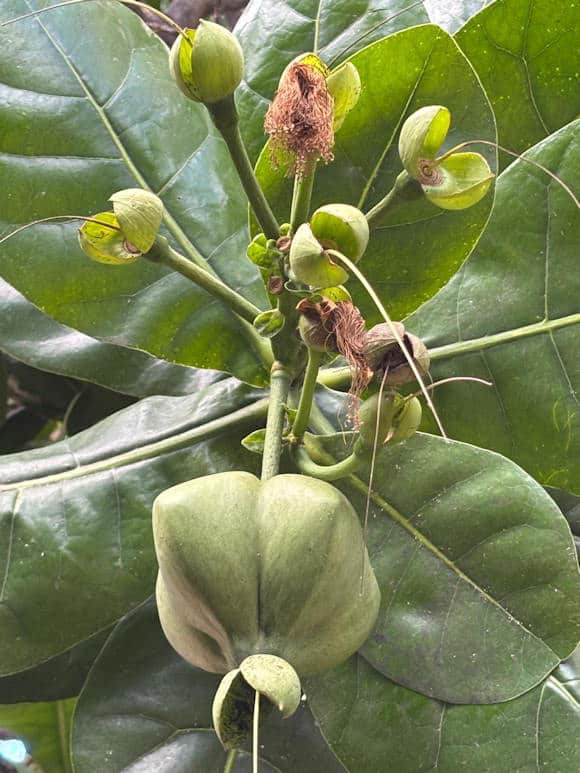
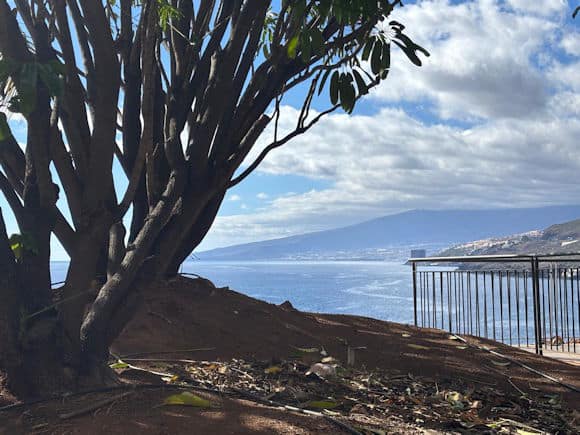
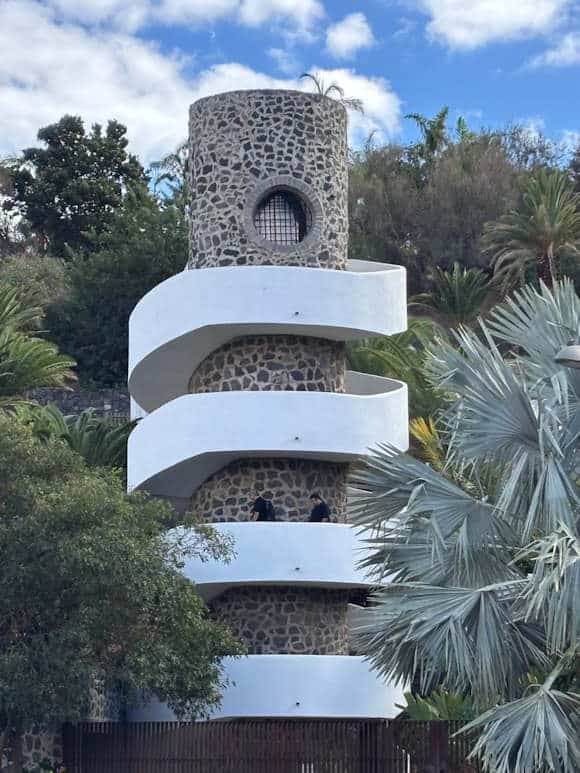
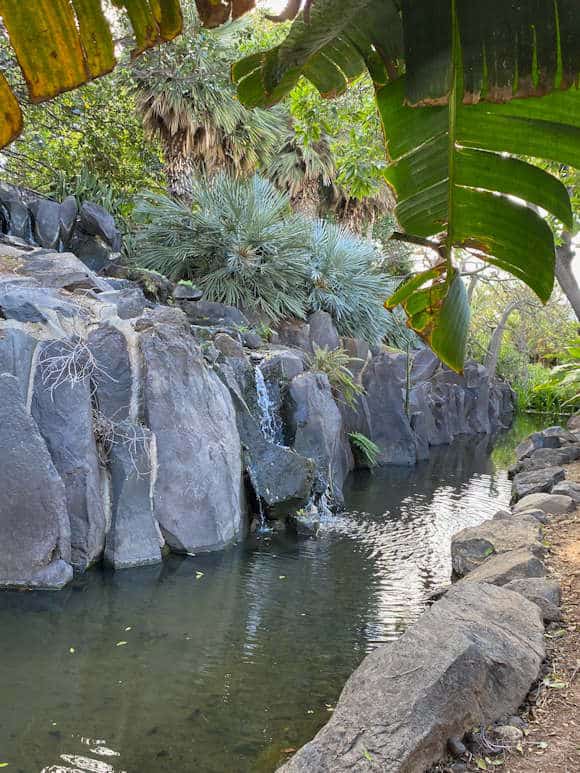
The entrance is beside a white curved spiral tower, wrapped around a lift which leads across a glass-sided bridge to gently rising inclines zig-zagging up the hillside. The summit is relatively flat with sinuous paths that take you through the various biogeographical zones, past streams, ponds and waterfalls and with views over the ocean. Companion planting of shrubs and ground cover from the appropriate areas make the settings look natural. Although there are sections dedicated to Asia and South and Central America, what makes the collection remarkable is the diversity of palms from isolated island groups, such as Hawaii, Madagascar, Borneo and New Guinea and islands of the Caribbean. Unusually, there are aquatic palms, climbing and ground-cover palms to be found, and many others threatened with extinction, some critically so. There are some small areas roped off which appear to be for further developments. Irrigation, where needed, is with recycled water from sewage.
It is now Europe’s most important outdoor collection of palms. I never thought I would get excited about visiting a palmatum, but there is something joyful about going somewhere with low expectations and finding something spectacularly good.
Garden Details:
Website: palmetumtenerife.es/
Address: Avda de la Constitucion 5, 38005 Santa Cruz de Tenerife, Spain
Café: Light refreshments
Dogs: No
Disabled Access: Surprisingly good for such a hilly site
Opening Times: 10.00 – 18.00 (last entry 17.00)
Visit: 27 December 2025