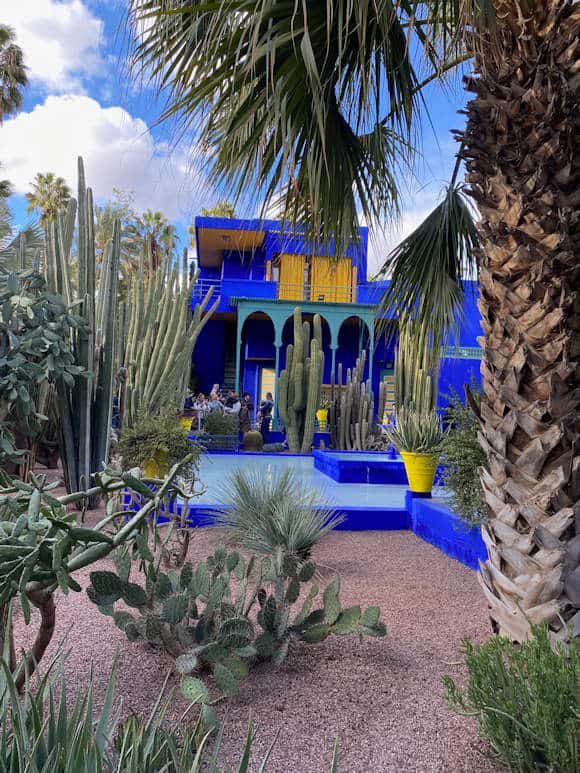
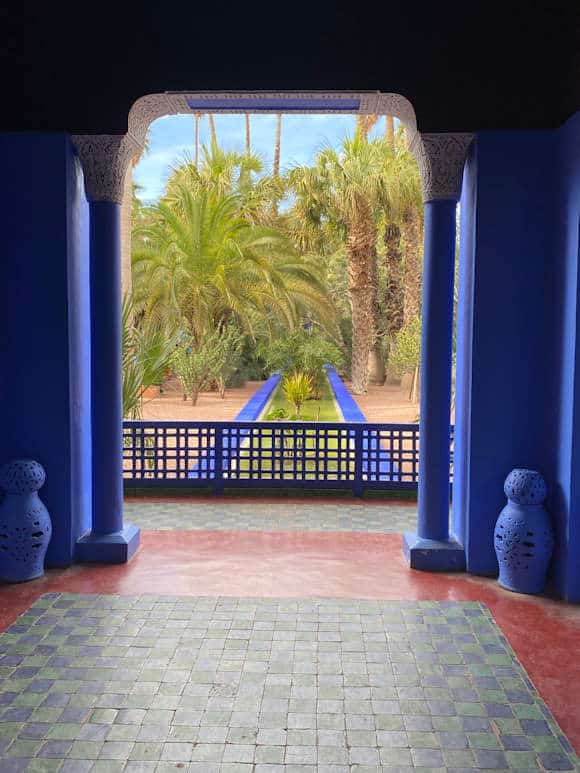
The first time I visited Jardin Marjorelle, some 12 years ago, I was excited to see this wonderful garden with its cacti and succulents displayed with an artist’s eye. It was a revelation to me, and of course the vibrant Marjorelle blue of the buildings, edgings and pots and the wonderful Marrakech light made it a unique, magical and very special place. I wrote about on this website (‘Jardin Marjorelle – The Shock of the Blue’), and it was with some trepidation that I returned for a second visit.
Visiting a garden, and taking photographs is freezing it in time. Gardens are constantly changing to a greater or lesser extent, with change of ownership, change of funding, a dynamic new head gardener with a clear vision, or lack of interest, decline and decay. I make return visits to gardens on many occasions and usually the change is gradual.
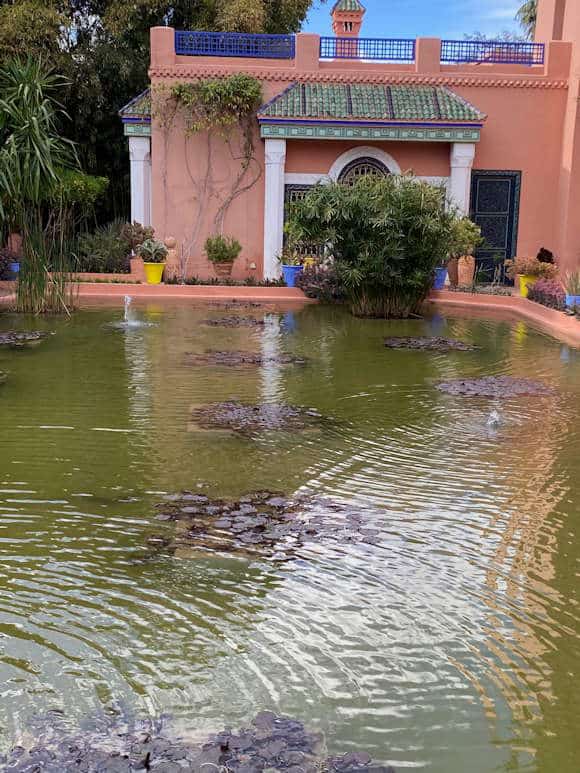
The return visit to Jardin Marjorelle left me in a state of shock. Then it was a peaceful oasis on the edge of Marrakech; now it attracts 1.2 million visitors a year (2023). Entry is only by timed on-line booking, the garden has designated visitor routes, discreet bamboo and cord fencing to prevent straying, and many custodians keeping a watchful eye.
How did this happen, and to what extent has this captivating place survived and retained its unique quality?
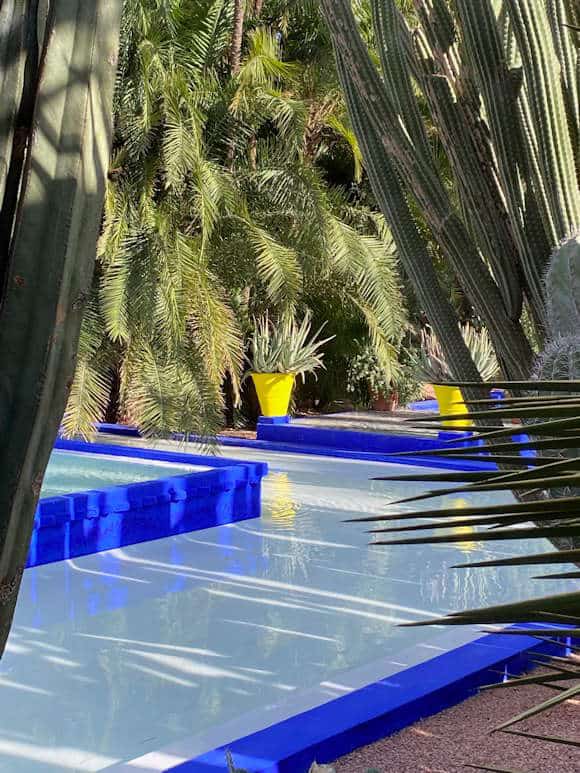
Jacques Marjorelle was a French painter, known for his orientalist style of painting and in 1924 he built a villa on an adjacent site, in a Moorish/Art Deco style. The studio followed in 1931 with a garden of cacti and succulents, pools, rills and ponds set out with a painter’s eye. To help cover the maintenance costs of the garden, he first opened it to the public in 1947. Following a serious car accident, Marjorelle moved back to France in 1962, and the garden went into decline.
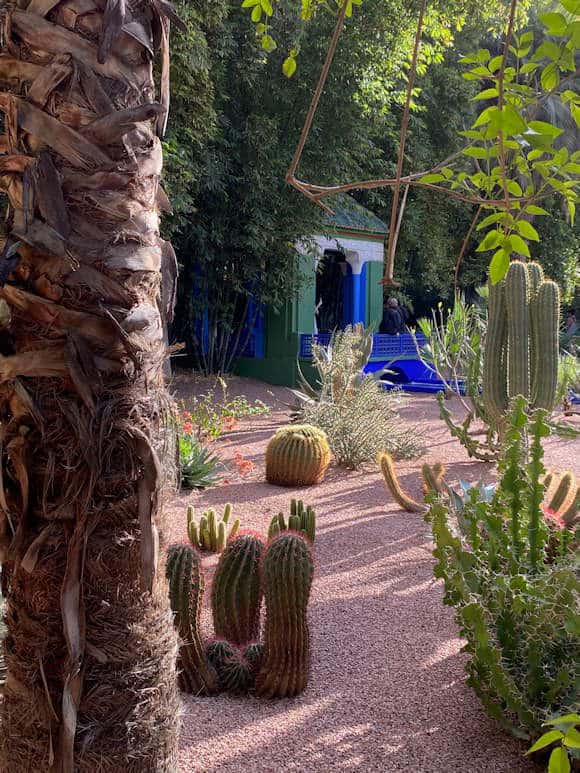
It was in 1980 that Yves St. Laurent and his partner Pierre Berge bought the neglected garden and studio and the adjacent residential property, saving them from destruction by proposed hotel development. The garden was reopened soon after.
The Pierre Berge Museum of Berber Arts (situated in the Studio) followed in 2011, the YSL Museum opened on an adjoining site in 2017, and in 2018 the Marjorelle garden was expanded incorporating part of the grounds of Villa Oasis, where Berge had lived until his death in 2017. These changes have been skilfully managed by the Fondation Jardin Marjorelle but have dramatically increased the visitor numbers.
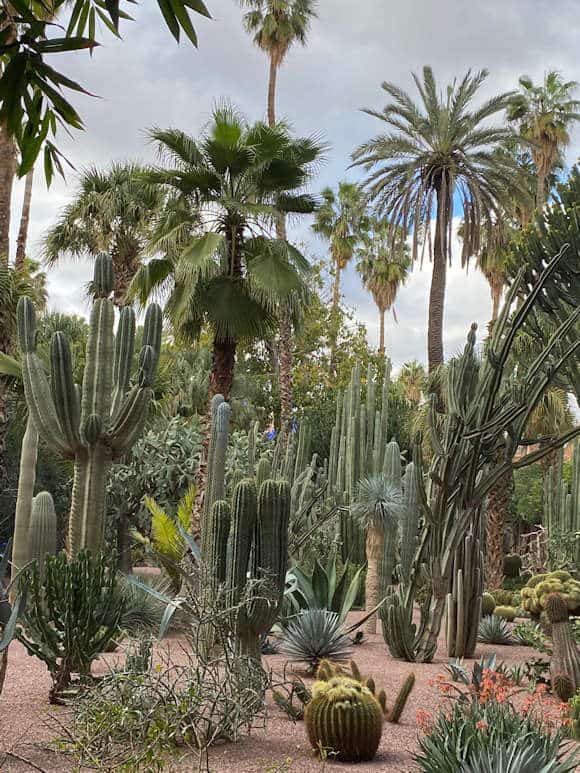
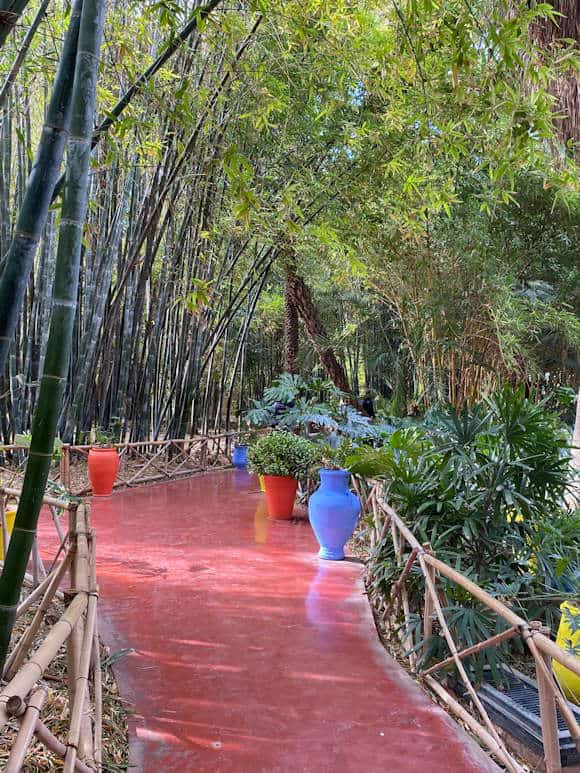
So does this garden still deserve its world-famous status? Undoubtedly yes. The cacti and succulents have now grown to stupendous proportions, set out on the pink Marrakech gravel. On a bright sunny day, the contrast to the Marjorelle blue is still vibrant and exciting. Everything is kept in immaculate condition, and attendants have a full-time job sweeping up the falling leaves from the cathedral-sized bamboo grove.
Jardin Marjorelle has spawned a whole new garden genre for dry arid climates, and is a source of inspiration for a new generation of garden-makers across the world. However, the garden is not large, and its sense of peaceful intimacy has been compromised. Best to pick a time when it is less busy……
Garden Details:
Website: Jardin Marjorelle
Address: Rue Yves St Laurent, Marrakech 40090, Morocco
Café: Large up-market courtyard cafe
Dogs: No
Disabled Access: Good
Opening Times: Jardin Marjorelle 8.00 – 18.30
Last entry 18.00 Every Day
Private Garden of Villa Oasis 8.00 – 17.30
Last Entry 17.00 Not Wednesdays
Pierre Berge Museum of Berber Arts 8.30 – 18.30
Last Entry 18.00 Every Day (Closed the Wednesday of my visit)
The Yves St Laurent Museum is adjacent to Jardin Marjorelle
Separate ticketing and times of entry