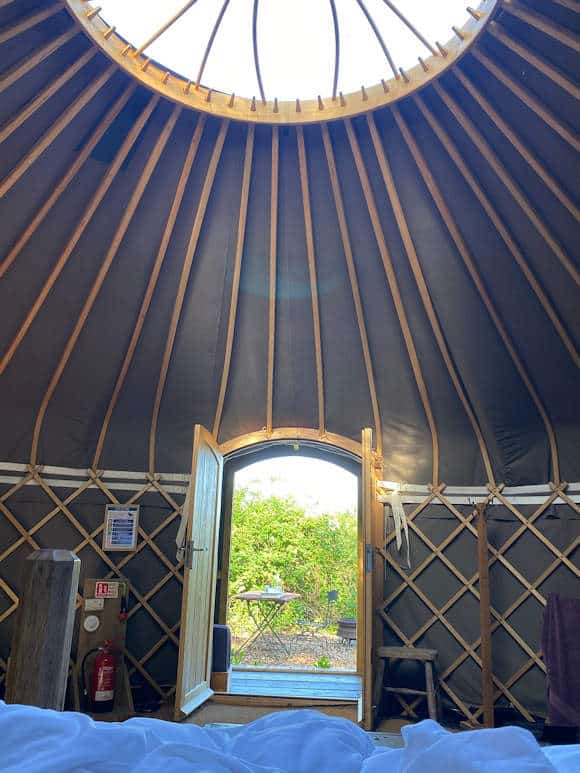
The Yurt
After reading Isabella Tree’s book ‘Wilding: The Return of Nature to a British Farm’ I have long wanted to visit the Knepp Estate and see for myself the remarkable explosion in biodiversity that has happened there over the last 25 years. Spending two nights in a yurt on the estate was a birthday present I had dreamed of.
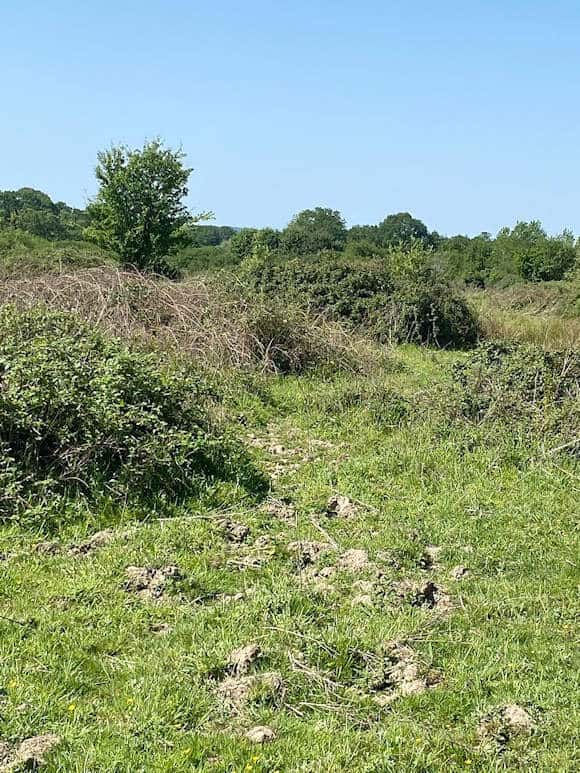
Rewilded Landscape
First impressions after leaving the ‘Wilding’ shop and Michelin-rated restored barn restaurant, and arriving at the glamping site were mixed. The yurt was smart, with antique furniture and rugs and a wood-burning stove, but the landscape of bramble ‘domes’, open grass, and oak copses with scampering rabbits seemed disappointing.
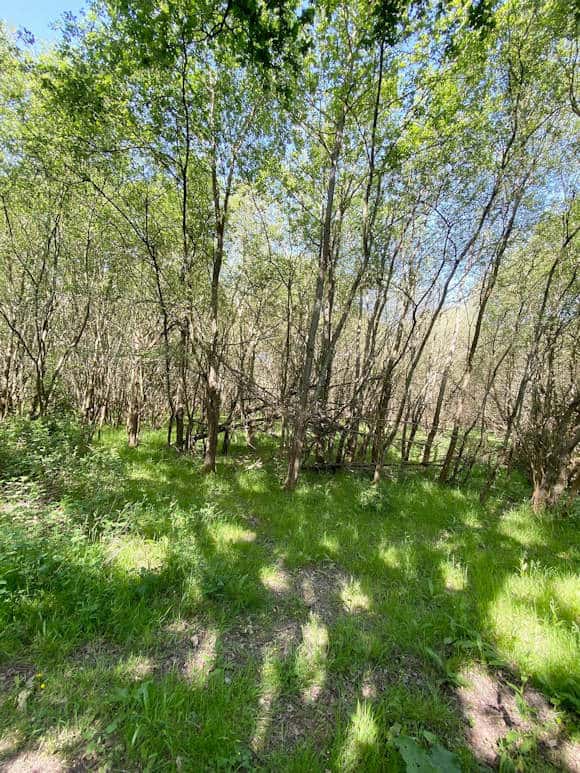
Coppiced Spinney
At 4.30 the following morning I was woken by a gloriously loud dawn chorus of robin, chaffinch, chiff-chaff, rook, house sparrow, blackbird, long-tailed tit and black-headed gull. The air smelt deliciously sweet, and to someone living in a large urban centre, nature at full belt was a revelation. An evening walk by the lake revealed an amazing chorus of 22 different birds. Knepp has many public footpaths through the estate, and these have been transformed into five circular routes by skilfully adding sections to them; the longest route being four hours, the shortest 45 minutes.
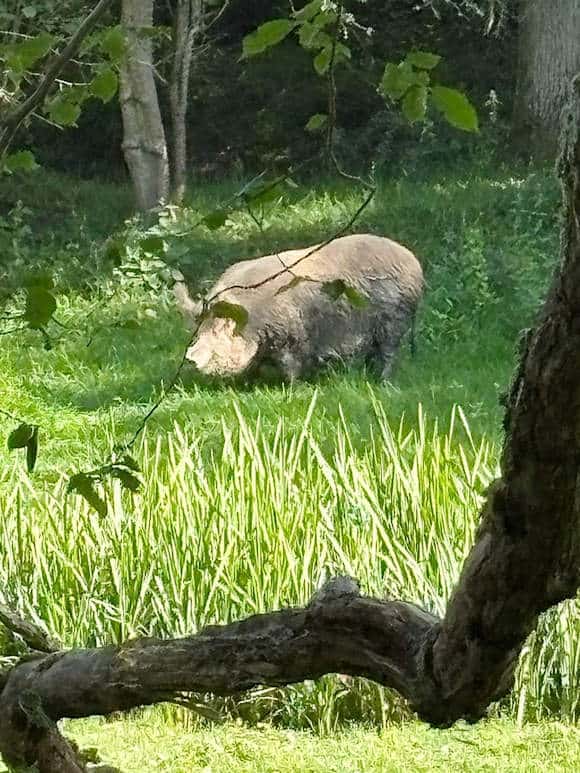
Tamworth Pig
The sows form nests for the piglets and cover them with a duvet of dried leaves to keep them warm. At the start of the project, the pigs would only rootle grass verges as the cultivated land was lifeless.
This 1,100 acre part of the 3,500 acre estate was always marginally viable farmland, a heavy Weald clay soil, prone to waterlogging in the winter months, and a cracked hard baked pan in summer. Intensively farmed with arable crops over many years, the soils had become depleted, drenched in fertilisers, fungicides and chemicals paid for by government farm subsidies. My uninformed expectation was that after so many years the land would have returned to spring meadows of wild flowers. I was sadly mistaken. I was later to find out that the thorny domes of nibbled bramble, blackthorn, hawthorn and dog rose were predator-proof enclosures for nesting birds and small invertebrates, and for the young trees – the nurseries of this biodiverse explosion. This was a completely different mindset.
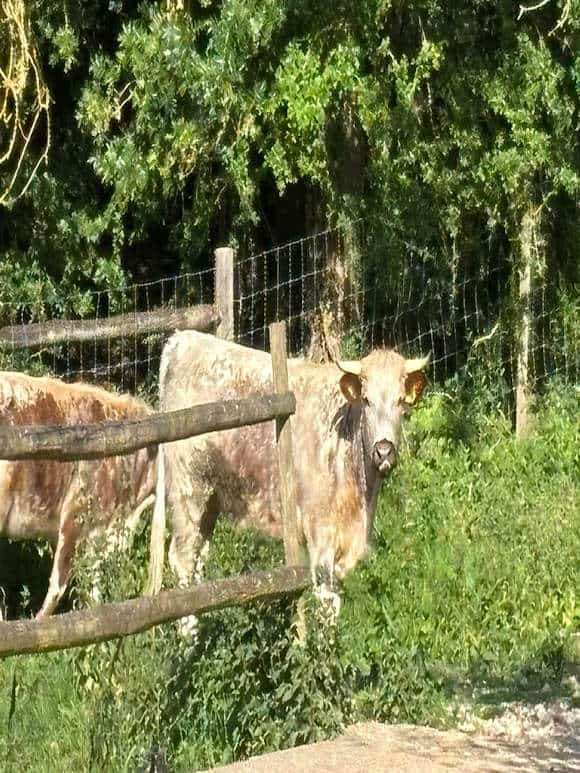
Long-horned Cattle
Mothers go away from the herd to birth, then bring the calf back and introduce it.
The early years at Knepp brought anger and derision to the owners Charlie Burrell and Isabella Tree. Serious concerns about allowing ragwort (toxic to livestock) and creeping thistle to proliferate proved unfounded. After about ten years of rewilding, public opinion started to change, in part cultural, but also because the spectacular biodiversity at Knepp established itself much faster than anyone had anticipated. The return of turtle doves, harvest mice, nightingales and purple emperor butterflies sparked huge public interest, and Knepp built upon this by successfully reintroducing storks, the first time in 600 years. At one location I was thrilled to see eighteen in the sky at once with their 1.8 metre (six feet) wingspan.
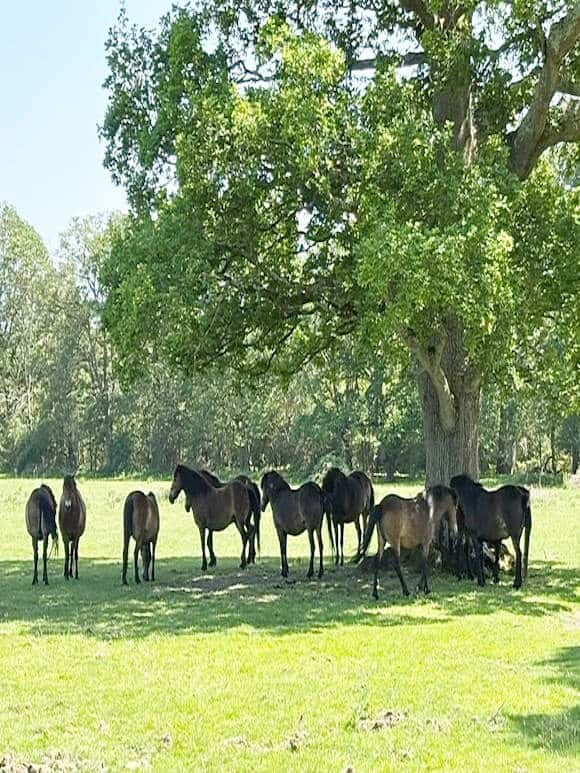
Exmoor Ponies
Their sharp teeth closely nibble the grass, whereas cattle wrap it around their tongues and pull.
There is a popular misconception that the natural landscape in England, before man’s intervention, was forest. This was not the case, it was a patchwork of trees and open landscape grazed by large herbivores, such as wild boar, tarpans and aurochs (now extinct breeds of large horses and cattle). These rootled the land, allowing seeds to flourish, and mini-ponds to breed wild life. At Knepp, the open areas between bramble domes and copses are grazed by Tamworth pigs, red and fallow deer, long-horned cattle, and Exmoor ponies. Numbers of deer, cattle and pigs have to be controlled, with some of the meat ending up in the huge freezers in the shop.
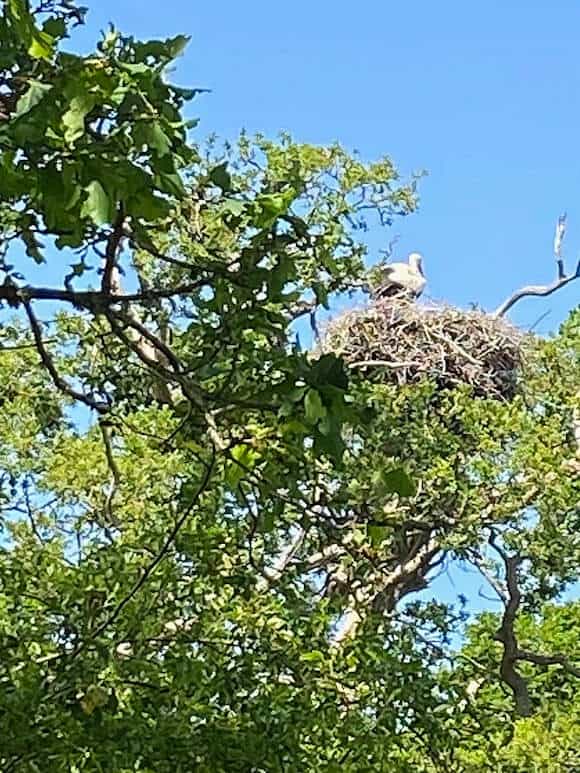
Nesting Stork
The storks are migratory and are ringed. They winter in Southern Morocco.
The most significant recent development at Knepp has been the establishment of the beaver colony. Knepp waited ten years to get its licence, but the law has since been relaxed. After one year, these industrious eco-engineers had built a 30 metre wide dam over a small straight stream, allowing water to back up, creating a wetland area. After four years the enclosure is nearly all water. The benefits to water quality, ground water levels, improved biodiversity and most importantly, the amelioration of downstream flooding, are now widely recognised.
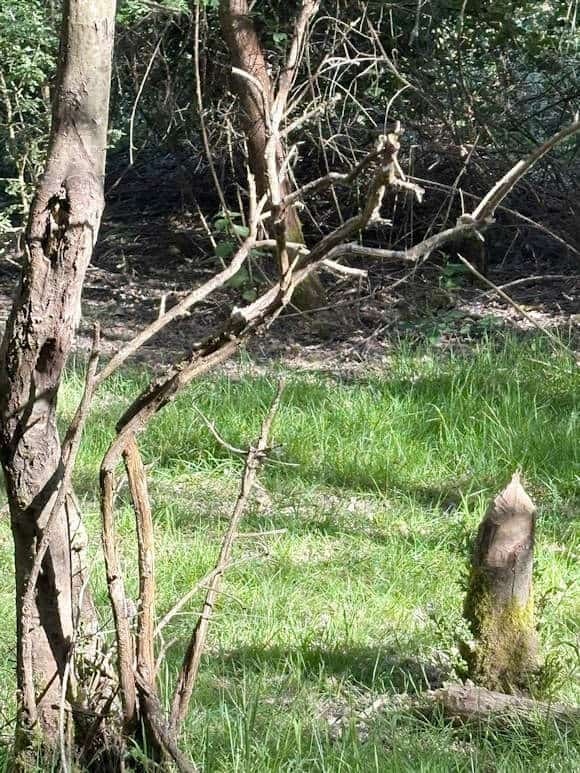
Chiselled Stump in Pencil Alley
Beavers are secretive, nocturnal animals not easily seen. The toothy chiselling on the trees is a clear sign of their presence.
Knepp has been called ‘the Sussex Serengeti’ and the wildlife tourism provides a valuable income stream. Considered on its own, it is a brave, and trail-blazing experimental testbed….. but you will need to wait for ‘The Knepp Estate 2 for the rest of the story……
Richard Jackson September, 2026
Estate Details: Knepp Wilding Kitchen and Shop, Worthing Road, Dial Post, RH13 8NQ
Website: knepp.co.uk
Café: Michelin-rated (green rosette for exceptional gastronomy and sustainability).
Open breakfast Monday – Sunday 9.00am to 11.00am Large restaurant courtyard.
Lunch Monday – Sunday 12pm – 3 pm.
Dinner Saturday 5.30pm -8.20pm.
Coffee trailer.
Dogs: On public footpaths, under close control. Similarly, in the shop and restaurant.
Disabled Access: Could prove difficult in places on public footpaths.
Opening Times:
Walkers Car park (chargeable) Monday – Sunday 7.00am – 7.00pm.
Specialist tours by Land Cruiser, and of the bats, and the butterflies. Also childrens’ activities and tours of Knepp’s Rewilded Walled Garden (a future posting). Also large educational programme, special events, summer BBQ evenings and author evenings – check website.